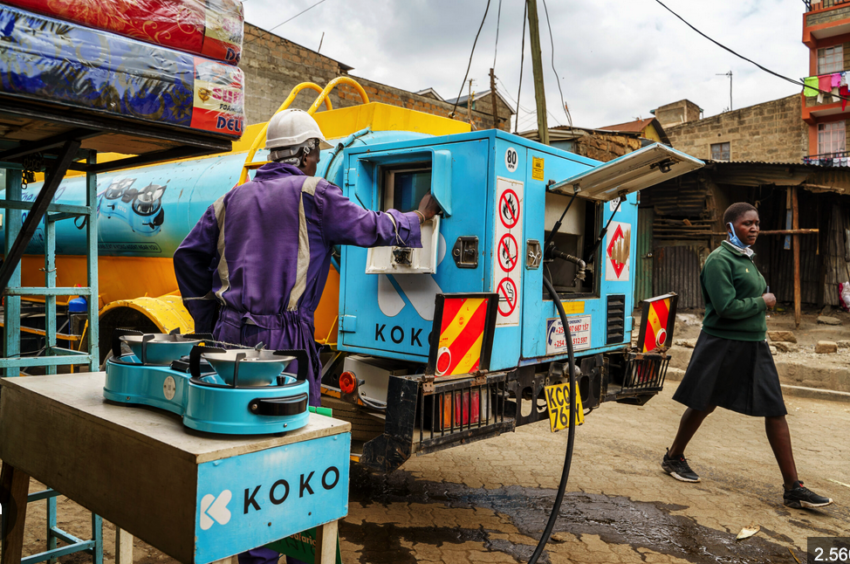
The collapse of Koko Networks, a Kenyan clean-cooking startup, that employed about 700 people and served 1.3 million households, is a stress test for the role of Article 6.2 in carbon markets.
The controversy, however, reflects a broader misunderstanding of the legal and procedural requirements of Article 6.2. It is not true, for example, that the Kenyan government is obliged to issue Letters of Authorization (LoAs) to project developers, simply because a project has high quality.
A host country is not obliged to issue a Letter of Authorization (LoAs) to project developers, simply because a project has high quality. Key is whether it meets its national climate target for ‘ITMO’ transfer
Only nations that meet their Nationally-Determined Contributions (NDCs) can transfer ITMOs. The government is right to be reluctant in signing LoAs, as it is not proven yet Kenya will meet its NDC and it hasn’t signed a single one to date. See also my quotes in “Confusion on Corresponding Adjustments clouds ITMO dreams”.
That said, Koko’s project clearly contributes a lot to Kenya’s NDC. Its smart cookstoves track fuel usage real-time, providing unusually strong data integrity. Art.6.2 could eventually deliver higher revenues for both the project and the government. The best way to get certainty of ultimate Art 6.2. transfer or a single project or programme is to make it part of a bilateral Art 6.2 Agreement; or start as a voluntary credit project and wait until there is more certainly and then request an LoA. Hence, in that framework compliance with NDC is discussed and more visible. In the meantime, even w/o LoA, a VCM price above $5 is justified for the high-quality Koko cookstoves project; but that is a general complaint. The sales of carbon credits is the mean income to lower the cost for the households.
For the VCM CA is not obliged. IC-VCM leaves that to the host country and refers to see the VCMI Code of Practice.
For CORSIA compliance, this will also mean it will require some time. Compliance is due 2028, but probably airlines can also surrender credits in the true-up period. In the mean-time airlines can compensate impact using the VCM and ICAO should start elaborating cap-and-trade, as we cannot rely on carbon credits only to decarbonise the aviation sector.